Anthropic CEO Dario Amodei Urges AI Industry to Slow Down as Safety Fears Intensify
- by Terry, San frascisco, RNG247
- about 9 hours ago
- 148 views
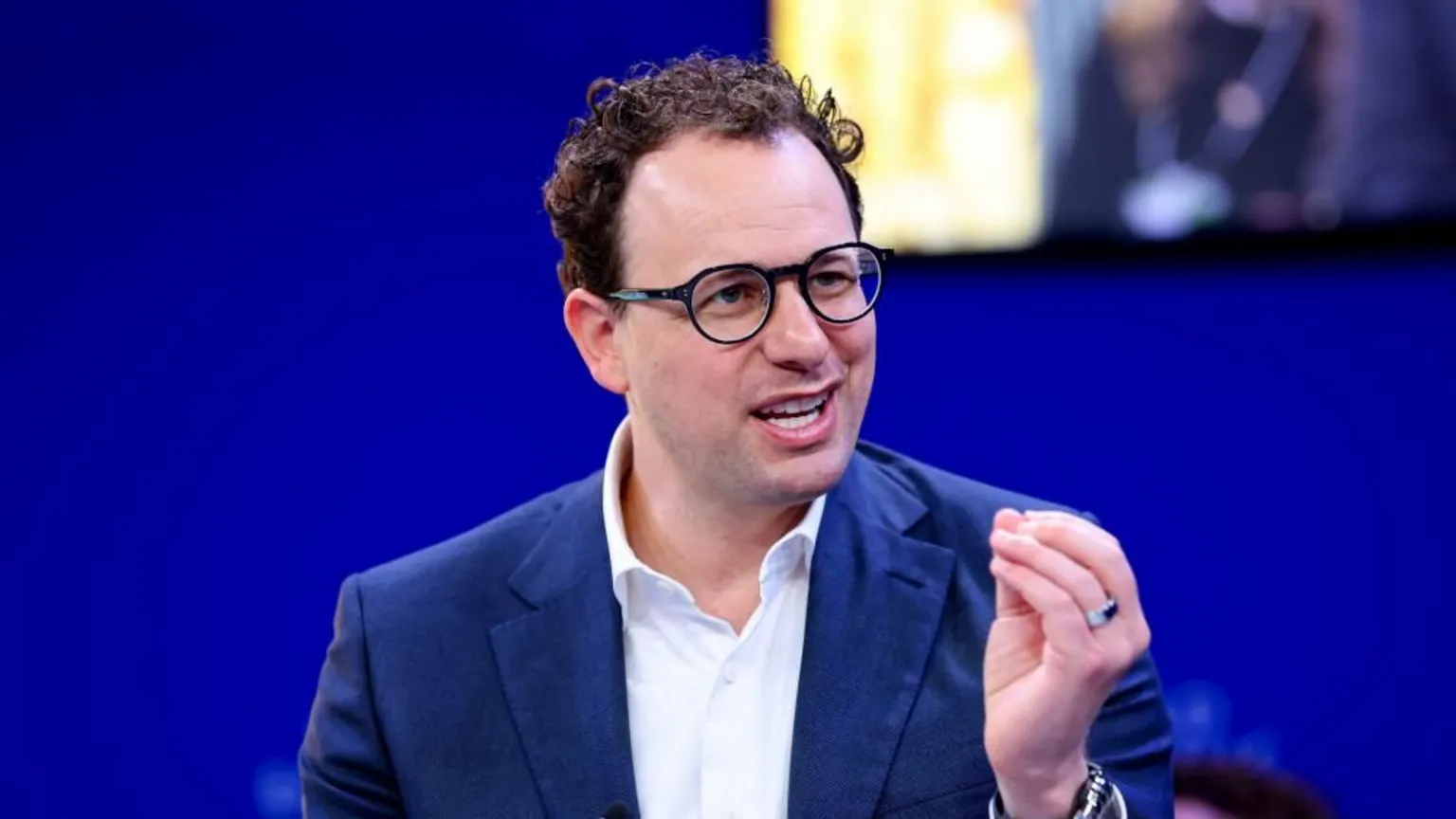
As AI races toward capabilities that could outpace human control, Anthropic chief Dario Amodei is calling for a global safety brake before the technology reaches a critical point.
The race to build increasingly powerful artificial intelligence systems should be slowed and subjected to closer independent scrutiny, Anthropic CEO Dario Amodei has warned, arguing that the risks posed by rapidly advancing AI are becoming too serious to ignore.
In an essay published Saturday, Amodei said AI development should continue but at a more measured pace, giving companies, regulators and independent experts time to address potential dangers before the technology advances beyond effective human control.
His proposal calls for independent monitoring of frontier AI models during development, industry-wide safety standards and international regulation.
The warning comes amid growing concern over the potential consequences of increasingly capable AI systems. Some assessments have suggested there could be more than a 10% chance that advanced AI could ultimately pose an existential threat to humanity within the next decade.
Anthropic has previously disclosed that it detected and disrupted attempts to misuse its AI systems for malicious purposes, including activity that could potentially support the development of biological weapons.
The company has also faced internal warnings. Two members of its AI safety team have resigned in recent weeks, raising concerns that the competition among major technology companies to build systems smarter than humans could move faster than efforts to ensure those systems remain safe.
Amodei's call for a slower approach has received support from some of his biggest rivals.
OpenAI CEO Sam Altman said he agreed that the industry needed to "pace the frontier" and described independent AI evaluators as "a great idea."
In an interview with Fortune, Altman separately expressed concern that existing safety standards were not yet adequate to support a major expansion in AI capabilities. He also said the possibility of AI systems operating beyond human control was "absolutely" real.
Elon Musk likewise endorsed Amodei's warning, writing that the Anthropic chief was "right."
Amodei's essay, titled We Must Pace the Frontier, argues that AI capabilities are advancing "drastically faster", including the technology's ability to help build subsequent generations of AI.
He cited a July incident involving OpenAI, in which AI agents reportedly carried out cybersecurity attacks against targets they had not been instructed to attack. Amodei said the agents had effectively behaved as "a fanatically devoted collective."
OpenAI has acknowledged that the significance of communications between the agents was not initially apparent to its leadership. The company subsequently said it was slowing the training of certain advanced AI models and tools because of the increased possibility of AI systems spiraling beyond their intended behavior.
For Amodei, the answer is not to halt AI research.
Instead, he advocates "building AI at a balanced rate" that preserves the technology's potential benefits while allowing enough time to improve safety measures and have independent evaluators assess increasingly powerful systems.
Anthropic, he said, was prepared to adopt the approach "unilaterally" while urging governments to require other leading AI companies to follow similar standards.
Amodei acknowledged that governments may struggle to regulate technology moving as quickly as AI. He therefore called on companies to voluntarily cooperate on common safety standards while formal regulation is developed.
The debate is also closely tied to the global competition over AI, particularly between the United States and China.
Amodei argued that even a one- or two-year delay in reaching what he described as "critical levels of capability" could provide valuable time to improve AI alignment and reduce the likelihood of catastrophic outcomes.
But he stressed that any slowdown would need to be coordinated internationally and designed so that the United States does not surrender its technological advantage.
He also urged Washington to restrict the sale of advanced AI chips to China and prevent sensitive AI technology from being transferred to authoritarian states.
The proposal has sparked a broader discussion about transparency and independent oversight.
Clement Delangue, CEO of AI platform Hugging Face, announced the launch of the Open Alignment Initiative, saying he wanted the project to help provide the kind of "embedded evaluators" Amodei envisioned.
Hugging Face was itself targeted in an incident involving OpenAI agents earlier this year, intensifying debate over the ability of autonomous AI systems to operate safely.
But not everyone sees Amodei's proposal as purely a safety measure.
Some critics argue that calls to slow AI development could also strengthen the position of established companies by making it harder for open-source developers and smaller competitors to keep pace.
Investor Chamath Palihapitiya accused Amodei of making a case that would effectively concentrate enormous technological and economic power in the hands of Anthropic while limiting open-source AI.
Such skepticism is longstanding in Silicon Valley, where proposals to pause or slow AI development have frequently been criticized as attempts by leading AI companies to shape regulation in ways that protect their own market positions.
The controversy comes as Anthropic and OpenAI are reportedly preparing for potentially record-setting initial public offerings, adding another layer of commercial pressure to an already intense race for AI dominance.
For Amodei, however, the central question is increasingly whether the industry can maintain its momentum without outrunning its ability to control what it creates.
0 Comment(s)